Master-spine examples
The working master-spine workflows, each with its last-working/tested/benchmarked .gh + .3dm + the
fresh data/ link. Open them in Rhino 8 + Grasshopper with the Frahan .gha deployed (see
../docs/INSTALL.md). Read GRASSHOPPER_BEST_PRACTICES.md first. Style: short sentences, no em dashes.
How to run any example
- Deploy the
.gha(Rhino closed), open the.3dm, then the.gh. - Heavy nodes (Scan Reconstruct, GPR migration, Block Pack, Carving, Recovery Cascade) ship with a
default-FALSE
Runtoggle. Press the per-stage Run toggles IN ORDER; do a single deliberate solve per stage (this avoids long blocking solves). Watch the message line for progress. - Point each data input at the
data/link listed below. The.3dmcarries its own geometry; only the external file-reference nodes need the path.
The workflows
| Folder | Workflow | Demonstrates | Data link |
|---|---|---|---|
01_quarry_to_wall/ |
quarry block -> fracture decompose -> ashlar pack -> masonry wall | the full quarry-to-masonry spine | synthetic quarry block (in the .3dm) |
02_masonry_assembly/ |
masonry assembly + build-order colouring + stability | assembly + RBE stability (W4-fixed) | synthetic blocks (in the .3dm) |
03_quarry_to_slabs/ |
quarry block -> slab-cut-by-fractures -> slabs (SUPERSEDED by 23_quarry_to_slab/, which ships README + PNGs + metrics) |
the FractureBlockPack / slab-cut path | synthetic block + fracture planes; or data/gpr/* fractures |
03_gpr_fracture_granite/ |
GPR radargram -> migrate -> fracture extraction (geologist brief) | granite-domain GPR fracture mapping | data/gpr/grimsel/ (MALA .rd3/.rad) |
04_scan_to_bench_engineer/ |
scan cloud -> normals -> reconstruct -> bench (engineer block-plan) | scan-to-bench reconstruction | data/granite_dells_tls/ or data/tongjiang/ |
05_artist_pointing_machine/ |
scan mesh -> carving stages -> pointing-machine guide (artist) | the carving / pointing-machine spine | a scan mesh: data/stanford_scans/ (or your own temple scan, DECIMATED per KB-1) |
07_scan_ingest_full/ |
full scan-ingest pipeline (load -> downsample -> normals -> ICP -> reconstruct) | the ingest front-end every spine shares | data/granite_dells_tls/, data/tongjiang/, data/stanford_scans/ |
10_pack2d/ |
2D slab nesting (exact NFP, hole-aware: HoleNest / Sheet Nest (Live)) | cut parts from a slab, 0-overlap | synthetic cut-list (in the .gh); METERS, slab 3.2x2.0 m |
11_pack3d/ |
3D block packing (Block Pack Tree, Kim 2025 guillotine) | quarry block subdivision, saw-cuttable | synthetic elements (in the .gh); METERS, block 3.0x1.5x1.5 m |
12_trencadis/ |
Trencadis mosaic (Catalog Pack, CVD-Lloyd + Hungarian) | broken-tile cladding panel | synthetic shards (in the .gh); MILLIMETERS, panel ~1100 mm |
13_surface_mapping/ |
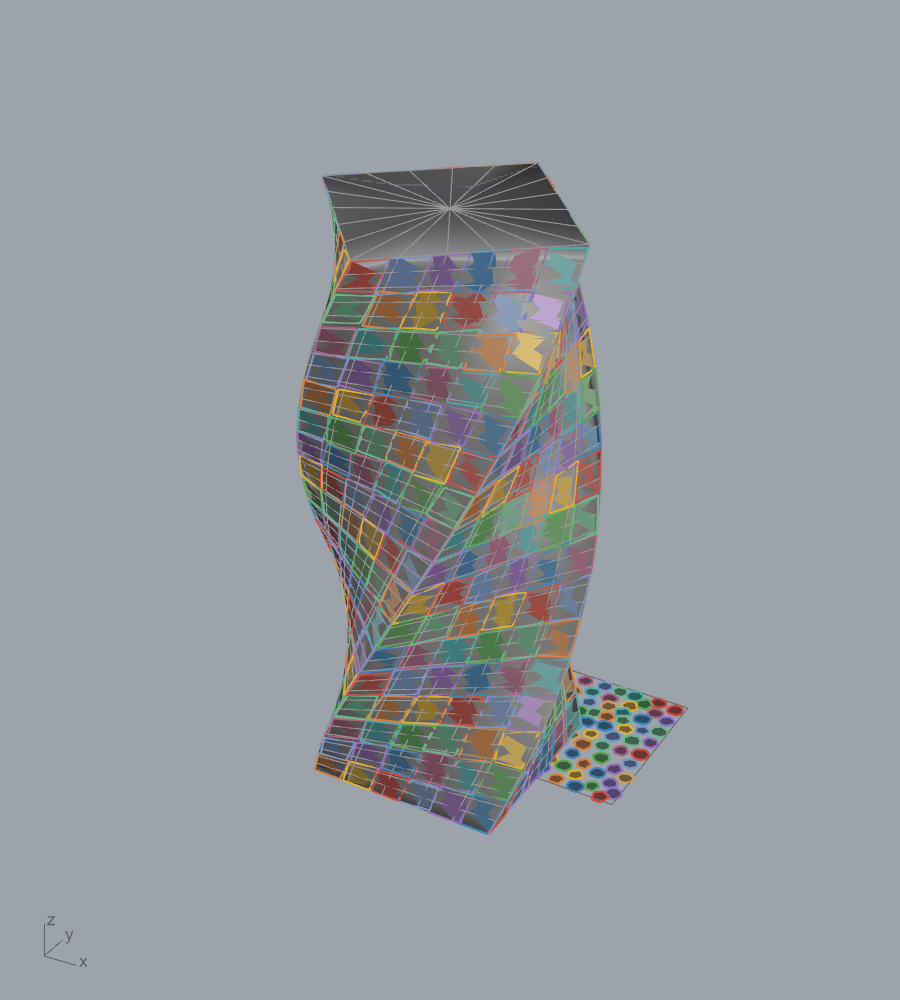
twisted block -> CGAL split-by-angle -> Trencadis cladding | surfaces from a solid + surface mosaic | synthetic twisted monument (in the .gh); MILLIMETERS, 1.2x1.2x3.5 m |
14_kintsugi/ |
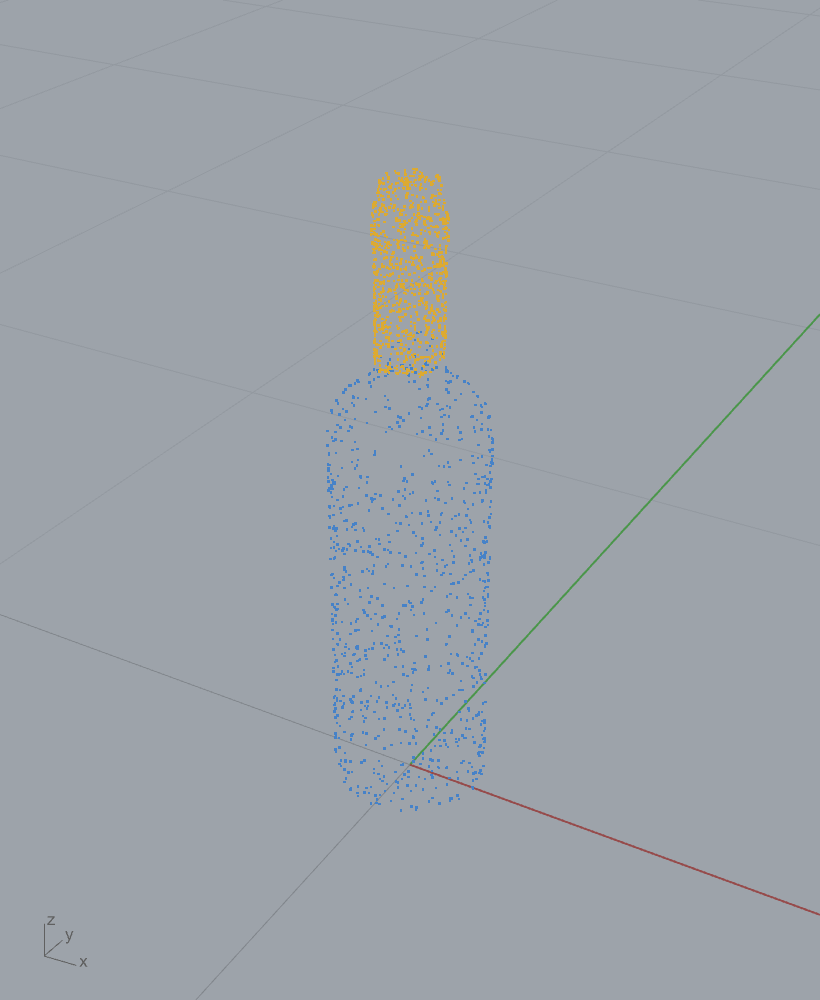
fractured-vessel reassembly (PuzzleFusion++ Port mode) | restoration on Breaking Bad parity data + SYNTHETIC generator chain (14_kintsugi_synthetic.gh, no external data) |
14_kintsugi/data/bb_sample_*.bin; synthetic chain BB-aligned 2026-07-11 (verifier 0.603 / 3 strong); natural network scale (auto-scale off) |
28_hole_nest/ |
hole-aware 2D nesting (HoleNest / ContactNfpHoleNester) | pack parts INTO sheet-holes + part-holes, 0-overlap, deterministic | synthetic cut-list + holed sheet (in the .gh) |
29_liveedge_floor/ |
live-edge flooring from irregular outlines (classify -> match+scribe -> brick-bond) | wavy-river irregular-board layout | synthetic boards (in the .gh, C# Script comp) |
30_discontinuity_sets/ |
point cloud -> PCA normals -> FACETS facets -> Watson joint sets + stereonet | scan-to-joint-sets (Discontinuity Sets D5F10048) | data/granite_dells_tls/ (clean granite) or data/tongjiang/ |
31_discontinuity_ingest/ |
measured-orientation ingest (CSV/GeoJSON/DXF/SHP) -> stereonet + Palmstrom block size | bring field/Compass/DSE measurements into Frahan | derived orientation tables (in the folder) |
32_scan_to_blocks/ |
joint sets -> DFN bridge (D5F1004B/4C) -> BlockCutOpt Omni block yield | scan/DFN -> dimension-stone block packing | DFN from example 30 joint sets |
Examples 15-27 (statue-to-blocks, surface packers, voussoirs 21/22, slab/marble 23-25, polygonal masonry 27) also ship in their folders; see
../docs/PERSONA_MAP.mdfor the full map.
More workflows (33-50 + vaults)
Each ships its own README (hero render, "what it shows", data provenance). The GPR chain (33-35, 40) runs on real georeferenced surveys; 47-50 are the pre-CAM fabrication + BIM handoff tail.
| Folder | Demonstrates |
|---|---|
33_gpr_marble_guillotine/ |
GPR marble -> stationary wire-saw guillotine blocks (the manufacturable hero) |
34_gpr_marble_oblique/ |
oblique (dip-following) quarry cuts on the marble beds (the georeferencing prize) |
35_gpr_quarry_full_workflow/ |
GPR quarry full spine: ingest -> beds -> slabs -> blocks |
36_fractured_block_to_slabs/ |
fractured block -> two fracture-bounded slabs |
37_block_to_cladding_facade/ |
block -> slabs -> cladding panels -> curved facade, with costing |
38_surface_discretize_tiles/ |
surface discretization -> matched cut tiles -> slabs (Panel Tile Surface) |
39_concave_nest/ |
concave-in-concave nesting (the honest high-yield trim) |
40_travertine_crosslithology/ |
cross-lithology cut-yield across marble, travertine, andesite (native .gsf) |
41_floor_tiling/ |
floor tile (boundary-trimmed) with grain direction + texture mapping |
42_wholeside_reassembly/ |
whole-side reassembly (Whole-Side Assemble) |
43_nbo_dry_stone_wall/ |
next-best-object dry-stone wall placement |
44_nbo_to_robot/ |
NBO pose -> robot frame + Force-Seat URScript (robot handoff) |
45_cut_and_fill_excavation/ |
cut-and-fill / soil excavation down to the rock face |
46_kinematic_intensity_screen/ |
kinematic feasibility + fracture-intensity rock-mass screen |
47_fabrication_handoff/ |
pre-CAM cut plan -> CAM / robot / COMPAS (the fabrication tail) |
48_block_matching_3d/ |
3D block matching / reassembly (Soft ICP 3D) |
49_extraction_order_plan/ |
quarry inventory -> yield -> extraction order -> saw-bed schedule -> report |
50_castle_keep_ifc/ |
castle keep -> masonry stability -> IFC / BIM export (the BIM handoff) |
vault_generation/ |
compression-only masonry vaults (TNA form-finding + whole-shell CRA) |
Digital-fabrication entrypoint renders (examples 10-14)
Built and solved live, then captured. Each is at correct per-application physical scale (meters for
slab/block/monument, millimetres for mosaic/vessel) and sits on the z=0 ground plane (2D nests flat on XY).
See each folder's README for the numbers and ../wiki/research/tolerances_dimensions_slm_roses.md for the
scale + tolerance basis.
| 2D slab nest | 3D quarry block | Trencadis mosaic |
|---|---|---|
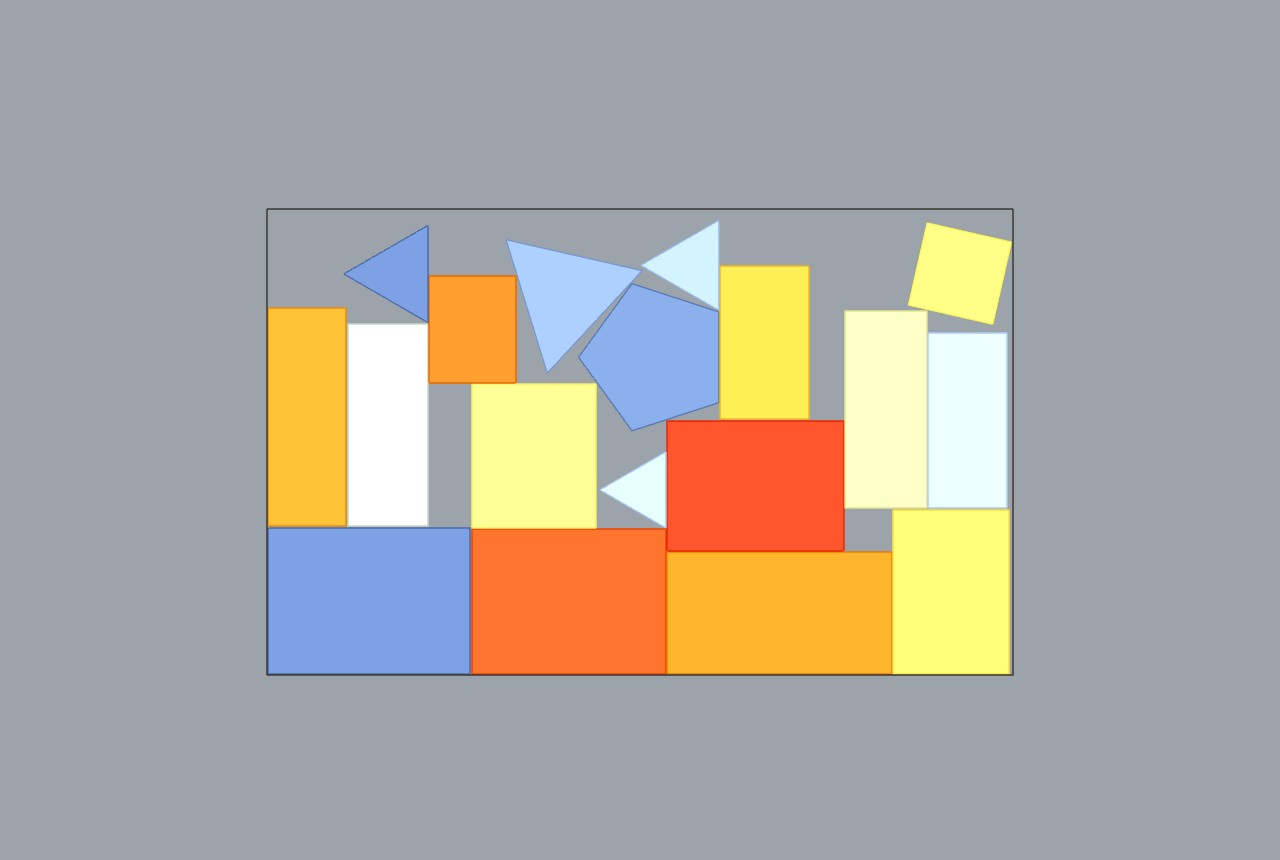 |
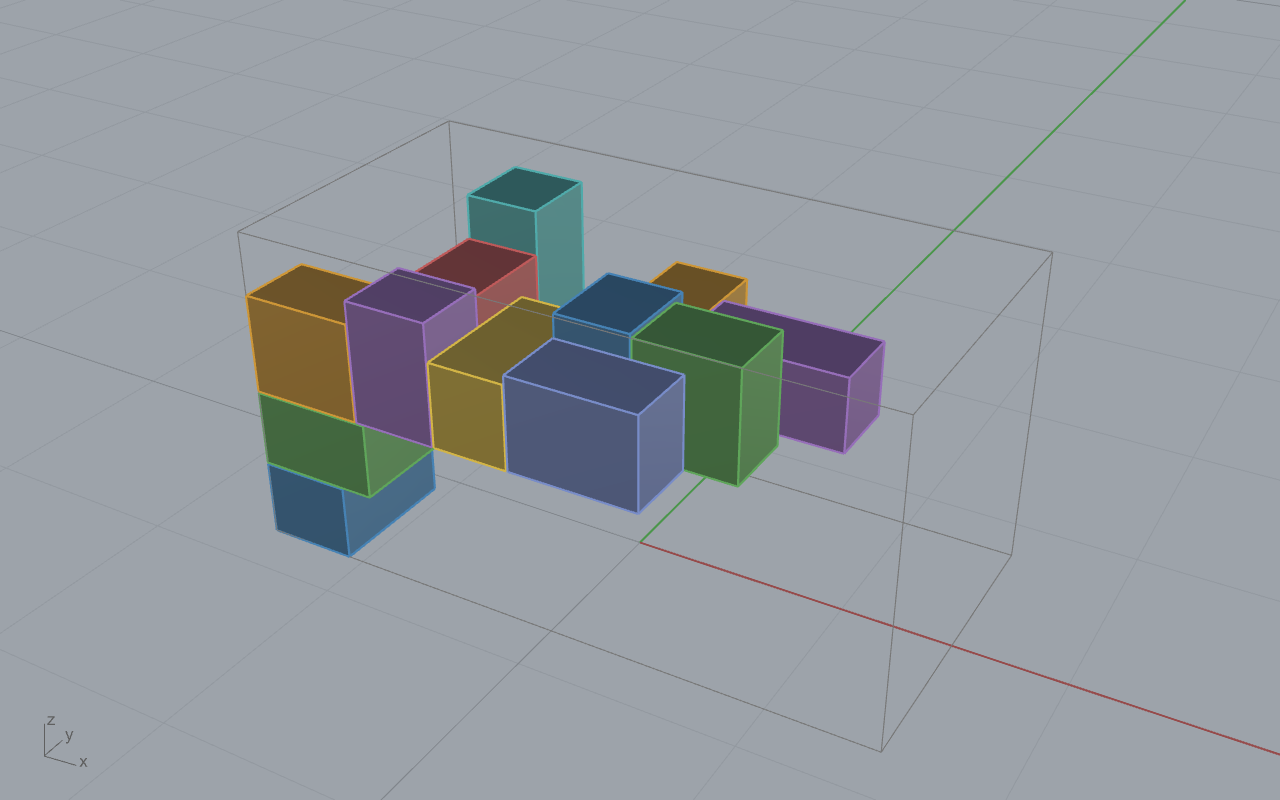 |
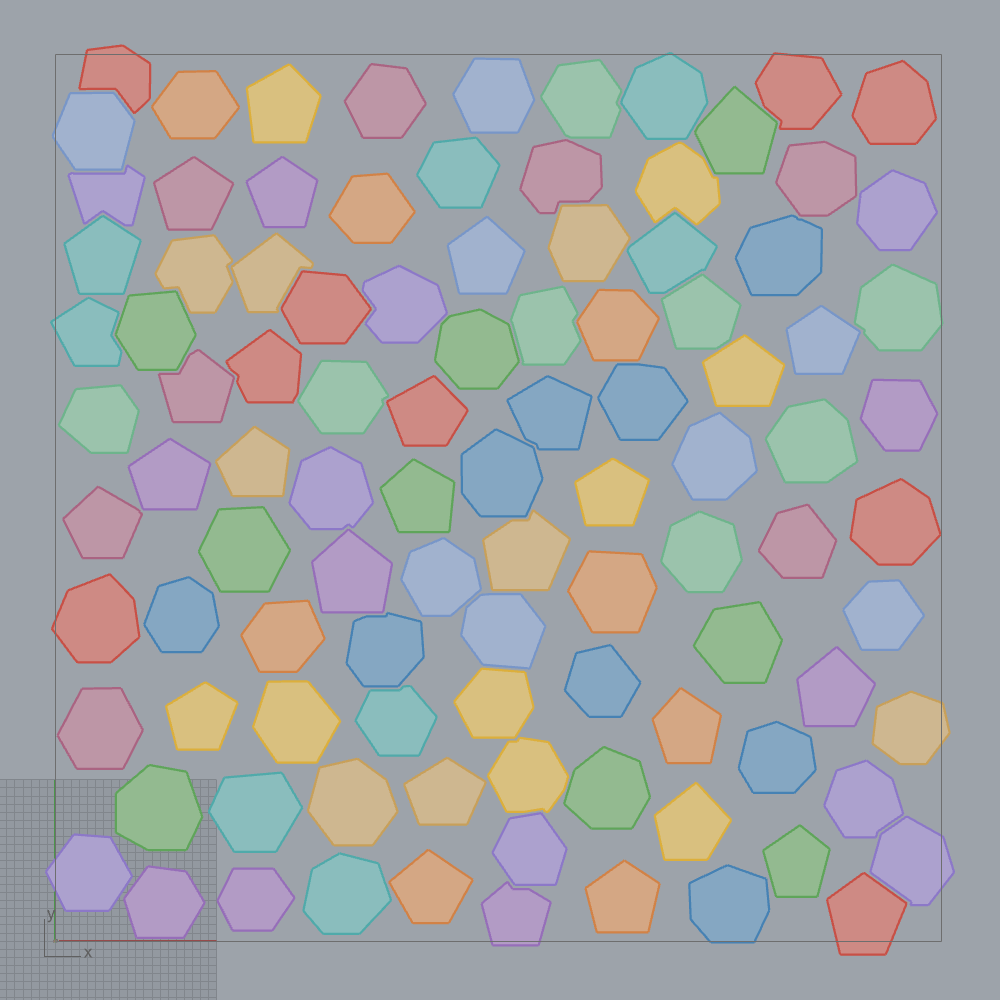 |
| 18 parts, 0-overlap, 3.2x2.0 m | 12/12 packed, 3.0x1.5x1.5 m | 100 shards, 5 mm grout, 1100 mm |
| Surfaces from a solid | Trencadis on the twist | Kintsugi reassembly |
|---|---|---|
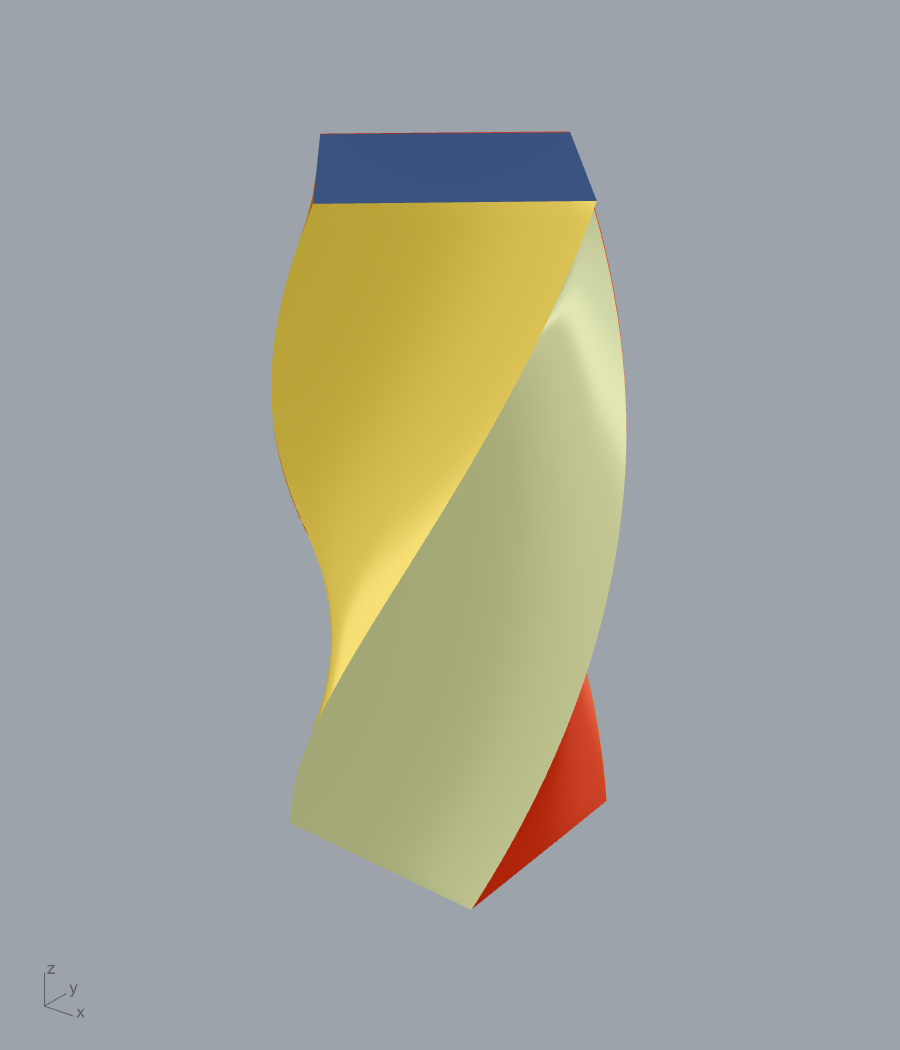 |
 |
 |
| 6 surfaces (CGAL angle split) | 176 shards, 4 mm grout | 2/2 placed, verifier 0.71 |
Data freshness (the links)
All datasets are in ../data/ with provenance in ../data/ATTRIBUTION.md. The blobs are staged on disk
and move to Git LFS at the public step; until then fetch any missing set via the download links in
ATTRIBUTION. The example data inputs reference ../data/<set>/ by the path the README lists.
Where to start
Two navigation docs route you to the right examples and components:
../docs/PERSONA_MAP.md— entry points by persona: geologists (03/08/09), surveyors (04/07/26), computational designers/architects (16/17/27, voussoirs 21/22), stone masons (11/24/25), artists (05/12/14/15), OSS developers (Lab primitives).../docs/SUPERSESSION_MAP.md— which legacy components were superseded by which current forms, with the benchmarks. Legacy stays loadable; use the current forms in new canvases.
Status + the live refresh
Examples 01-07 are the proven last-working canvases (the baseline). Examples 10-14 were built, solved,
captured, and saved LIVE (2026-06-06) via the official Rhino MCP + GH_DocumentIO.SaveQuiet, then
corrected to per-application physical scale + ground position + tolerances (the SLM+ROSES study). All
result .3dm carry the right unit label (m or mm) and sit on z=0. The bundled .gha in ../install/
is the current build; the in-component defaults now self-scale (auto tolerance, auto cell size, strict
no-overlap) so the examples open correct on the first try. See ../wiki/research/tolerances_dimensions_slm_roses.md,
../handoffs/LIVE_EXAMPLE_BUILD_HANDOFF.md, and REGENERATION_RECIPE.md.